


What Is PCBA Functional Testing? A Complete Guide
 11 Sep 2026
By Jack Liu
11 Sep 2026
By Jack Liu
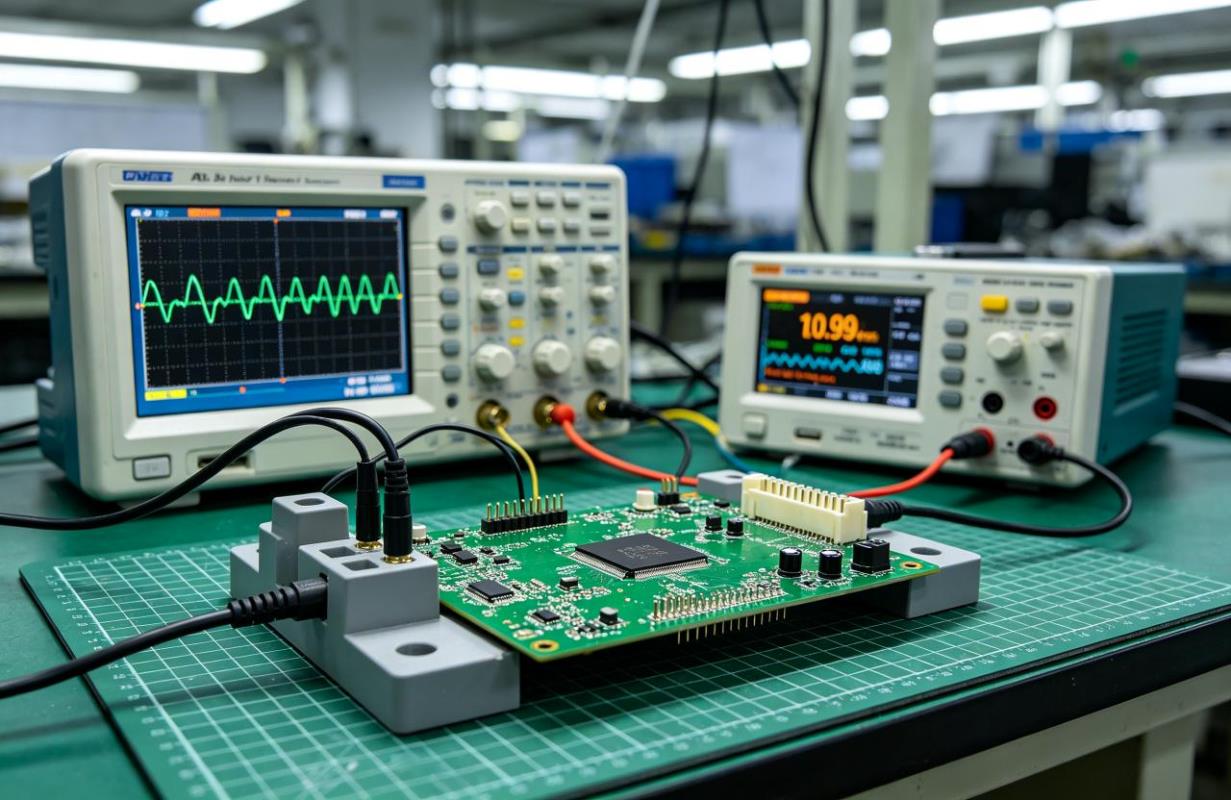
PCBA functional testing setup with oscilloscope and powered circuit board
A board can look clean under the microscope, pass solder joint inspection, and still fail the moment power is applied. For international buyers, that gap means rejected shipments, overseas returns, and delayed launches. PCBA functional testing answers one question before your boards leave the factory — does this assembled board actually work as specified?
________________________________________
What Is PCBA Functional Testing?
PCBA functional testing, often abbreviated as FCT, is a production-stage test that verifies whether an assembled printed circuit board performs according to its electrical and functional requirements. Unlike visual inspection, FCT confirms that the board can actually operate — not just that components are placed correctly.
During the test, the PCBA is powered on and connected to a test fixture, cables, software tools, or a simulated environment. Measurements typically cover voltage, current, communication response, sensor output, relay action, LED behavior, motor control, wireless function, or other application-specific performance. In short: AOI checks what the board looks like; functional testing checks what the board does.
|
Procurement tip: Don't just ask whether the supplier has “testing.” Ask which functions will be tested, what pass/fail limits are used, and whether a test report can be provided with the shipment. |
Why Functional Testing Matters in Export PCBA Orders
Export orders carry higher quality risk because shipping, customs, and return logistics are slower and more expensive. If a defect is found after delivery, the buyer may need to halt assembly and wait for replacement boards. Functional testing catches failures before boards leave the factory — especially valuable when the board sits inside a product that is hard to repair later, such as a smart home controller, industrial module, or medical device. A clear test process also shows overseas customers that quality is controlled by data.
________________________________________
What Does PCBA Functional Testing Usually Check?
1. Power-On Performance
The first step is controlled power-up. The test verifies that the board starts safely, current consumption is normal, and key voltage rails are stable. Abnormal current may indicate short circuits, wrong components, solder bridges, damaged ICs, or wrong firmware.
2. Input and Output Functions
Many boards need input and output verification — buttons, switches, LEDs, buzzers, displays, relays, motors, valves, heaters, or fans. The test confirms the board responds correctly to applied signals.
3. Communication Interfaces
Communication testing is critical for modern electronics. Common interfaces include UART, I2C, SPI, USB, CAN, RS485, Ethernet, Bluetooth, Wi-Fi, or cellular. A board can pass visual inspection yet fail communication due to wrong components, solder defects, or firmware issues.
4. Sensor and Analog Signal Testing
Smart home, medical, and industrial boards often include sensors or analog circuits. Functional testing may verify temperature, pressure, light, current, voltage, ADC readings, amplifier behavior, or calibration values. These tests require limits defined by the customer or engineering team.
5. Firmware Programming and Verification
Some PCBA functional testing includes firmware programming. After programming, the test verifies boot behavior, version number, memory function, device ID, communication response, or calibration data — important when one platform supports different firmware versions.
6. Product-Specific Simulation
The best functional test simulates real use conditions. An industrial control board may be tested with input signals and relay loads; a smart lock board with motor drive, button input, and communication commands.
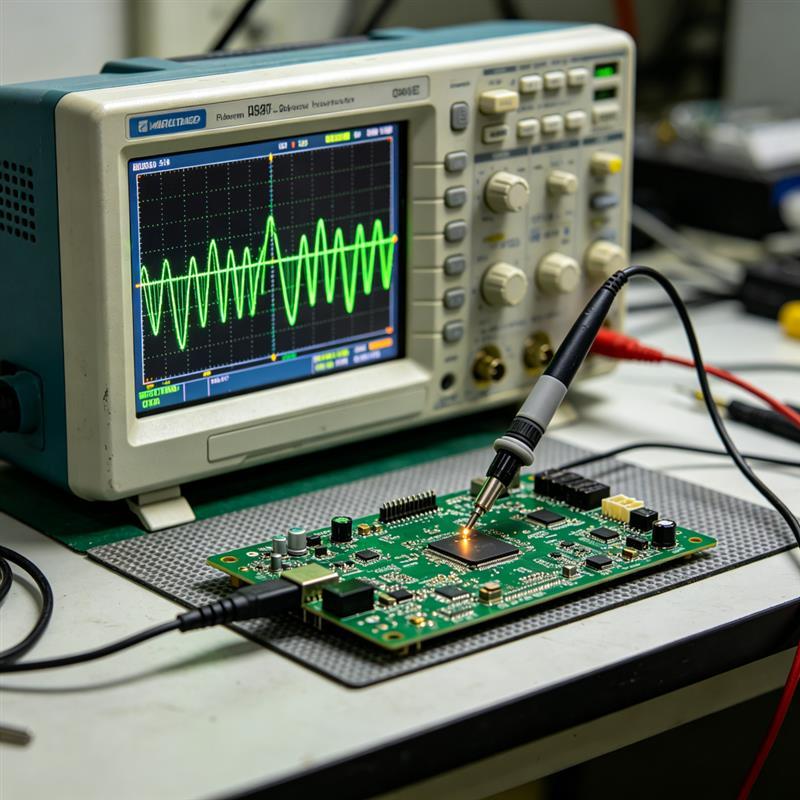
Oscilloscope waveform measurement during PCBA functional testing
Functional Testing vs Other PCBA Inspection Methods
Functional testing does not replace other inspections — it is one part of a complete quality control plan.
|
Method |
Main Purpose |
What It Cannot Fully Confirm |
|
AOI |
Checks component placement and visible solder defects |
Hidden solder joints and real circuit performance |
|
X-ray |
Checks BGA, QFN, and hidden solder areas |
Full product function |
|
ICT |
Measures component values and electrical connections |
Real operating behavior under application conditions |
|
FCT |
Verifies actual board function |
Every microscopic solder detail |
|
Burn-in test |
Screens early failures under time, temperature, or load |
Root cause without further diagnosis |
For simple boards, AOI plus basic power testing may be enough. For complex or high-value boards, AOI, X-ray, firmware programming, FCT, and aging tests may all be required. Many overseas buyers combine FCT with ICT — FCT verifies the system works, while ICT isolates faulty parts faster.
|
Procurement tip: Match the test method to the product risk. A low-cost LED board and an industrial safety controller should not have the same test plan. |
How the Functional Testing Process Works
Step 1: Define the Test Requirements
The buyer and supplier confirm which functions need testing, including power input, voltage range, communication commands, output behavior, firmware version, test limits, and special handling.
Step 2: Build the Test Fixture
A test fixture may use pogo pins, connectors, cables, clamps, power supplies, loads, programming tools, and software. For prototypes, manual cable testing may be acceptable. For bulk production, a fixture usually improves speed and consistency.
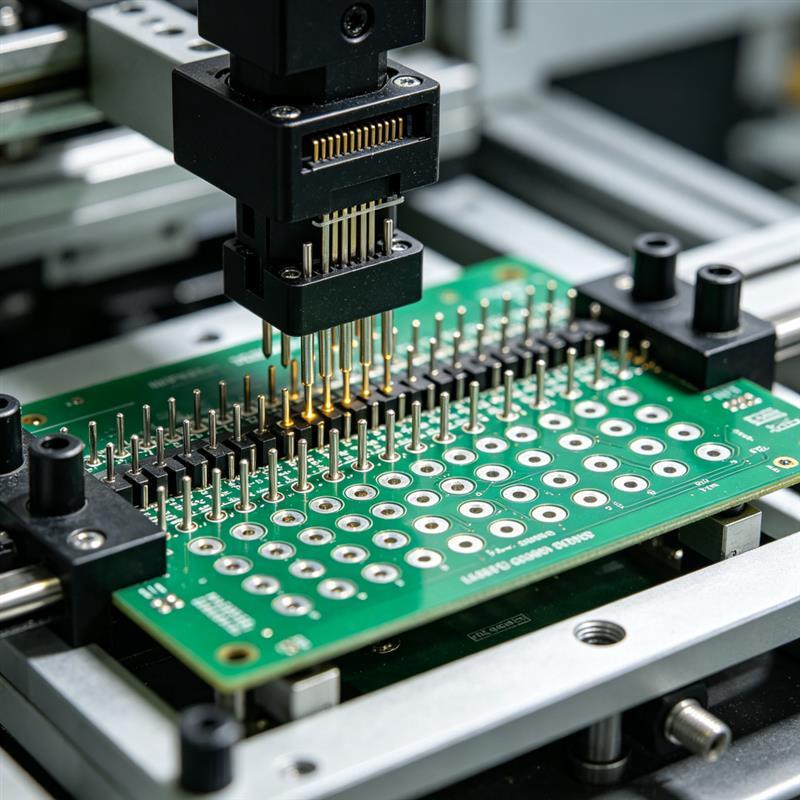
Functional test fixture with pogo pins contacting a PCB
Step 3: Prepare Test Software or Procedure
The supplier may run customer-provided software, develop a basic test program, or follow a manual checklist. The more automated, the fewer operator errors.
Step 4: Test the First Articles
Before full production, the first assembled boards should be tested and approved to confirm that fixture, firmware, and pass/fail criteria are correct.
Step 5: Run Production Testing and Record Results
During production, each board is tested per the approved procedure. Failed boards are separated, diagnosed, repaired if allowed, and retested. For export orders, test records help resolve later quality discussions.
________________________________________
Common Defects Found by Functional Testing
Functional testing can detect problems that visual inspection may miss: wrong component values, reversed parts, bad ICs, unstable power rails, firmware failure, communication failure, defective sensors, weak relay output, and intermittent solder joints. However, FCT is only as strong as its test coverage — if a function is not in the test procedure, the supplier cannot reliably screen it.
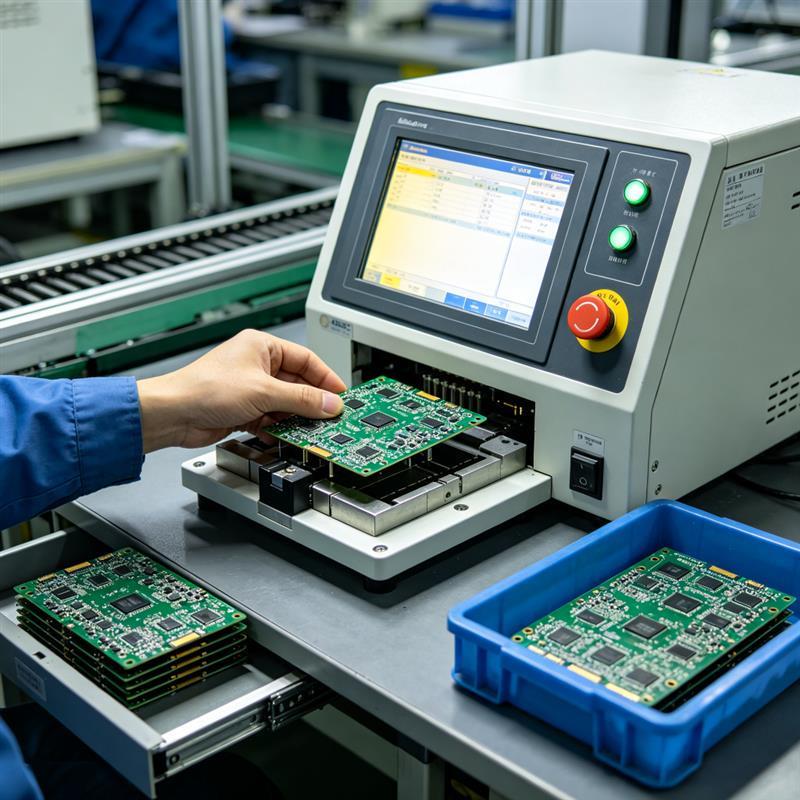
PCBA testing station on a production line
|
Procurement tip: A statement like “100% functional test” is not enough. Require a test checklist or test specification, even a short one. |
What Buyers Should Provide for Accurate FCT
To build a useful functional test, the PCBA supplier needs more than Gerber and BOM files. Buyers should provide:
• Product function description
• Schematic when available
• Firmware file and programming method
• Connector definition
• Input/output requirements
• Pass/fail limits
• Load conditions
If the board connects to a mobile app, cloud platform, host controller, battery pack, motor, or external sensor, explain this clearly during quotation. Missing test information often leads to weak testing, inaccurate lead time, or extra engineering charges.
________________________________________
Cost and Lead Time Considerations
Functional testing adds cost, but it often prevents larger losses. Cost depends on fixture complexity, test time per board, software development, number of test points, required equipment, and reporting requirements. For prototype orders, manual testing may be the right choice to control cost. For volume orders, a dedicated fixture is usually more efficient — improving speed, repeatability, and failure traceability across batches.
________________________________________
FAQ: PCBA Functional Testing for Overseas Buyers
Q1: Is functional testing necessary for every PCBA order?
Not every board needs complex FCT. Simple boards may only need AOI, visual inspection, and power-on testing. But boards with firmware, communication, sensors, relays, displays, motors, or safety-related functions should have functional testing.
Q2: Who should design the functional test — the buyer or the supplier?
The buyer understands the product function best, while the supplier understands production testing. The buyer provides requirements and pass/fail limits; the supplier designs a practical test method.
Q3: Can the supplier build a test fixture without my schematic?
Sometimes, but it is harder and less reliable. A schematic, test points, connector pinout, and functional description help build a better fixture. If the design is confidential, provide the necessary test interface information.
Q4: Does functional testing guarantee zero field failures?
No. FCT reduces risk but cannot guarantee that no board will ever fail. It verifies selected functions under defined test conditions. Long-term reliability may also require aging, environmental, or product-level validation.
Q5: Should every board be functionally tested?
For export PCBA orders, 100% functional testing is recommended for most finished or semi-finished boards. Sampling may be acceptable for simple, mature products, but it increases risk.
Q6: What should be included in a functional test report?
A practical report may include serial number, test date, operator or machine ID, firmware version, key measured values, pass/fail result, and failure code.
________________________________________
Final Recommendation
PCBA functional testing is not just a quality control step — it is a risk control tool for exporters and overseas buyers. It confirms that each assembled board can perform its intended function before packing and shipment. For consumer electronics, smart home, industrial control, and medical electronics, the right FCT plan can reduce hidden defects and protect delivery schedules.
Planning a new custom PCBA project or repeat production? Contact our engineering team for a customized PCBA assembly quotation. We will review your files, suggest a practical functional testing plan, and reduce production and export quality risks.
-
How to Avoid Common PCB Assembly Defects: A Complete Guide
17 Aug 2026 -

SMT vs Through-Hole Assembly: Which One Should You Choose?
23 Jun 2026 -

What is DFM in PCB Design? A Complete Guide for Exporters & Startups
20 May 2026 -

How to Reduce PCB Manufacturing Cost: 10 Actionable Tips for 2026
09 May 2026 -

PCBA Prototype Service: Fast Turnaround for Product Development
17 Apr 2026 -

How to Ensure Crack-Free PCBs: Inspection, Prevention & Repair
01 Apr 2026