


PCBA Functional Testing: Methods and Industry Standards
 02 Mar 2026 17:51:40 GMT
By admin
02 Mar 2026 17:51:40 GMT
By admin
Introduction
Functional testing verifies that a completed PCBA performs its intended functions correctly, rather than just meeting visual assembly standards. For PCBA exporters, functional testing (FCT) also serves as a critical contractual tool: it provides objective evidence for incoming quality assurance (QA) processes, supports warranty containment efforts, and reduces dispute resolution cycles when customers encounter field returns.
Workmanship standards such as IPC-A-610 define clear acceptability criteria for electronic assemblies, while IPC J-STD-001 outlines process and verification requirements for soldered interconnections. However, functional testing is where product performance requirements are translated into measurable pass/fail outcomes that validate real-world functionality.
Required Customer Inputs
IPC reliability guidance emphasizes that requirements and acceptance criteria should be agreement-driven (AABUS, "as agreed between user and supplier") between the exporter and customer. For this reason, exporters should collect the following inputs at the RFQ or purchase order stage, before designing test fixtures or creating test scripts:
|
Customer Input |
Why It Is Required for Functional Testing |
Typical Format |
|
Market destination and regulatory context |
Determines labeling, documentation, and safety compliance requirements |
"EU industrial controller" |
|
IPC class and acceptance baseline |
Aligns workmanship disposition decisions when test failures require rework |
IPC class + AABUS notes |
|
Sampling expectation (AQL or 100%) |
Defines test fixture quantity, production takt time, and product release rules |
ISO 2859-1 AQL or 100% FCT |
|
Required tests and coverage |
Specifies mandatory testing methods and the required evidence set |
"FCT + boundary-scan + programming" |
|
Pass/fail limits and key parameters |
Translates subjective "works correctly" criteria into measurable acceptance thresholds |
Voltage/current ranges, protocol timing specifications |
|
Configuration lock |
Ensures the tested product configuration matches the shipped product |
PCB revision, BOM/AVL list, firmware version, coating specification |
________________________________________
Functional Test Methods Exporters Actually Use
Functional testing for export PCBA programs typically combines workmanship acceptability checks (per IPC-A-610), process compliance verification (per J-STD-001), and at least one electrical testing method to verify circuit nets, component functionality, and overall performance.
Fixture-Based Functional Test
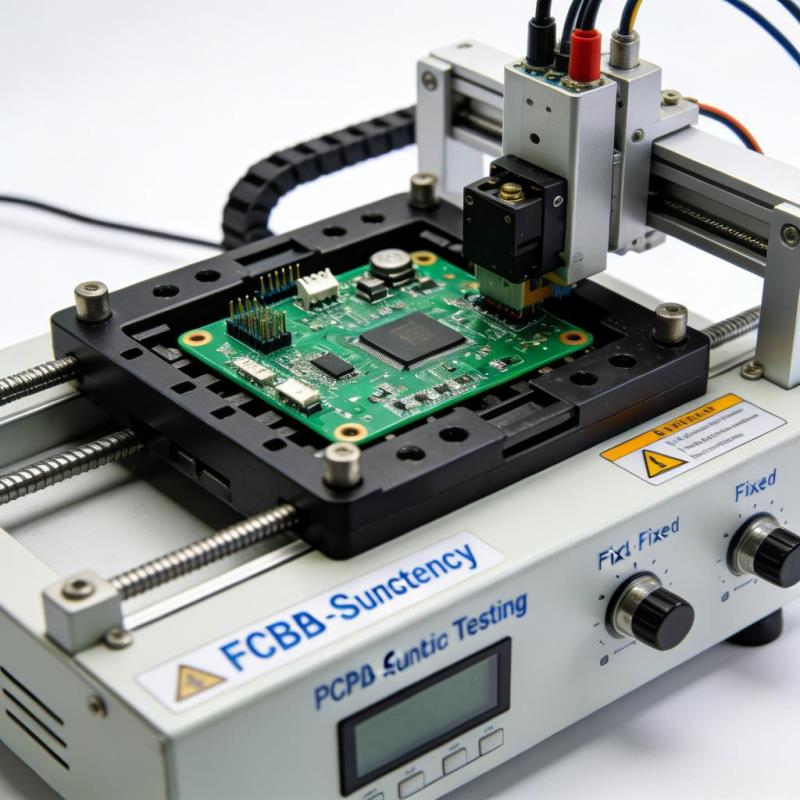
Fixture-based FCT uses a dedicated jig (often a bed-of-nails interface) to power the PCBA, load or verify firmware, stimulate input signals, and measure output responses. It is the highest-throughput testing method once production volumes justify the tooling investment.
Exporters should design FCT processes around
measurable criteria rather than subjective behavior, and all test results
should be logged by unit serial number to support warranty analysis and product
containment efforts.
Practical Exporter Note: If the customer requires a retest policy or allows repaired units to be shipped, formalize rework and retest procedures using IPC-7711/21 guidance to ensure rework processes remain controlled and auditable.
In-Circuit Test and Flying Probe
ICT focuses on verifying assembly correctness at the component and circuit net level: detecting open circuits, short circuits, incorrect component values, and component orientation errors. Flying probe testing provides similar continuity and isolation checks without requiring a dedicated fixture, making it ideal for new product introduction (NPI) and low-volume production runs.
While IPC-9252 was written for electrical testing of unpopulated PCBs, it provides exporters with a structured framework for designing test fixtures, defining test parameters, and establishing test data management disciplines—all of which are applicable to ICT and netlist-based checks on assembled PCBs.
Boundary-Scan and Embedded Test Access
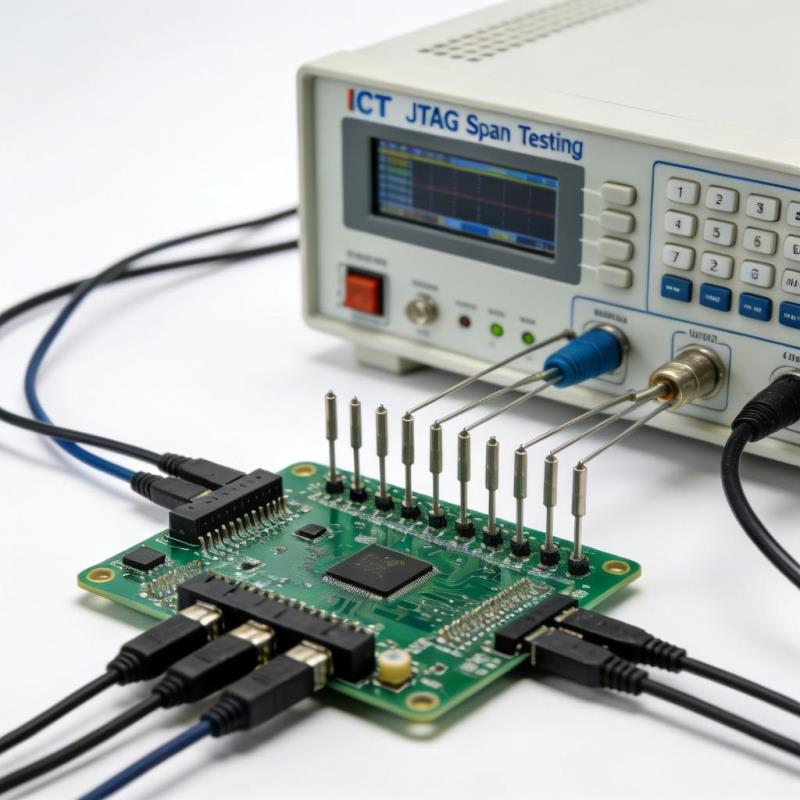
Boundary-scan (per IEEE 1149.1) is an industry-standard method for testing interconnections between integrated circuits on a PCB and accessing internal device states during testing and programming.
Exporters should use boundary-scan as a coverage
multiplier for dense digital designs where physical test access is limited by
fine-pitch components or complex board layouts.
Programming and Configuration Verification
Programming is considered part of functional testing because an incorrect firmware image or configuration can pass electrical checks but fail in field use. Exporters should store firmware version, programming results, and any configuration or calibration constants linked to each unit's serial number, and use IPC-1782 as a structured reference for minimum traceability requirements.
Method Selection Matrix
|
Method |
Best at Detecting |
Typical Exporter Use Case |
Primary Evidence Artifact |
|
FCT (fixture-based) |
System-level behavior and parametric performance |
Volume production runs, warranty-sensitive products |
Pass/fail log + measured values by serial number |
|
ICT / flying probe |
Open/short circuits, incorrect component values, missing components |
NPI and defect containment, high-mix low-volume production |
Netlist test results + defect location map |
|
Boundary-scan (JTAG) |
Digital interconnect faults, programming access issues |
Fine-pitch digital boards with limited test points |
Boundary-scan test report + chain verification results |
|
Workmanship inspection |
Visual solder quality and component placement issues |
All production runs |
IPC-A-610 acceptance record |
________________________________________
Defining Pass/Fail Criteria and Coverage
Functional test failures often occur due to vague acceptance criteria. Export customers also reject "mystery pass" results that do not clearly demonstrate what parameters were measured and verified.
Build a Measurable Acceptance Definition
Anchor physical assembly acceptability in IPC-A-610 and process compliance expectations in J-STD-001, then define test acceptance criteria using measurable thresholds that the customer has formally signed off on. J-STD-001 explicitly discusses product classification and verification frequency differences by IPC class, which helps exporters determine appropriate verification strictness and justify rework decisions.
Create a Golden Unit and Parameter Limits
Use a validated golden unit and calibrated reference instruments to establish baseline performance ranges, and write acceptance limits as engineering tolerances rather than subjective "looks OK" criteria. If outsourcing specialized measurements (such as EMC testing, safety certification, or calibration), prefer ISO/IEC 17025-accredited laboratories, as this standard ensures laboratories operate competently and generate internationally recognized valid results.
Practical Pass/Fail Table for Export Test Plans
|
Category |
Example Measurement |
Typical Pass Rule Format |
Notes for Auditability |
|
Power-up |
Inrush current, steady-state current |
"< X A inrush; Y–Z A steady-state" |
Log numeric measurement values for each unit |
|
Communications |
CAN/Ethernet/USB link establishment |
"Link establishes within N seconds; error rate < K" |
Store protocol error counters and link status data |
|
Sensors |
ADC reading under controlled stimulus |
"Within ±T% of reference value" |
Document stimulus method and reference value source |
|
Safety checks |
Overcurrent/thermal trip function |
"Trip occurs at A–B threshold; recovers within C seconds" |
Requires controlled test fixture to simulate fault conditions |
|
Firmware |
Version and checksum |
"Matches approved hash value" |
Required for export traceability and configuration control |
Handling Intermittent Failures and Retest Policy
Intermittent failures are a major source of friction in PCBA export transactions. Define an AABUS retest policy that specifies: the maximum number of retest attempts, when to quarantine units, and the distinction between "repaired units" and "screened units". If rework is required, use IPC-7711/21 structured procedures for rework and repair of electronic assemblies to ensure rework processes remain controlled and fully documented.
________________________________________
Export-Ready Documentation Audits and Accreditation
Exporters build customer trust by shipping complete, easy-to-audit quality evidence packages.
Traceability Package That Supports Containment
IPC-1782 establishes minimum requirements for manufacturing and supply chain traceability based on risk levels agreed between the user and supplier. For functional testing, this means exporters should map each unit's serial number to its test outcome, firmware version, and any critical component lots that could influence field failure modes.
Sampling and Release Discipline
If the contract allows sampling inspection, document the acceptance sampling system using ISO 2859-1, which defines single, double, and multiple sampling plans indexed by Acceptance Quality Limit (AQL). Exporters should record the sampling plan, inspection level, sample size, and accept/reject criteria alongside test reports so customers can independently verify the release decision.
Export Dossier Checklist
Export documentation requirements vary by destination, but trade authorities commonly require commercial invoices, bills of lading, and packing lists, plus special compliance documents. Pair these shipping documents with a technical quality dossier so customers' incoming QA teams can match shipment labels to test evidence.
|
Dossier Item |
Export Purpose |
How to Generate |
|
Certificate of Conformance |
Declares the build meets purchase order clauses and acceptance baselines |
Link to IPC class and approved test plan |
|
FCT Summary Report |
Demonstrates performance verification evidence |
Include acceptance limits and serial number ranges |
|
Raw FCT Logs |
Enables failure investigation and root cause analysis |
CSV or PDF format organized by serial number |
|
Traceability Map |
Supports product containment and recall efforts |
Fields aligned with IPC-1782 requirements |
|
Calibration Evidence |
Validates measurement credibility |
ISO/IEC 17025 traceability or equivalent calibration records |
|
Packing List + Label Map |
Supports customs clearance and receiving verification |
Serial number range per shipping carton |
________________________________________
Packaging and Shipping Controls That Protect Tested Quality
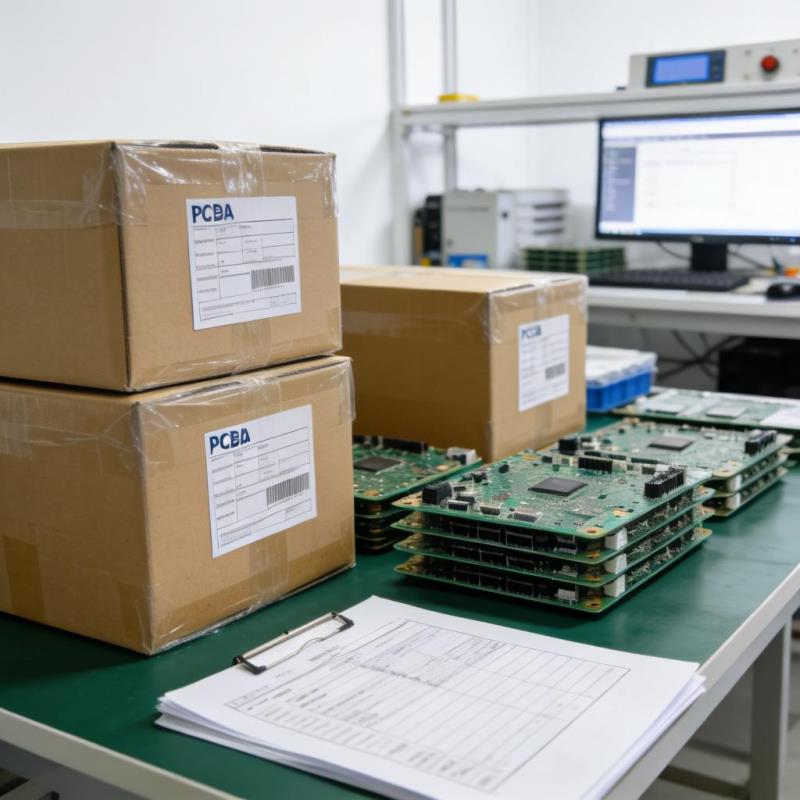
A PCBA can pass functional testing but still fail
at the customer's facility if it is damaged by electrostatic discharge (ESD),
moisture uptake, or transit forces.
|
Risk During Export |
Control Measure |
QC Checkpoint Exporters Should Record |
|
ESD damage |
ESD shielding packaging + ESD control program |
Packout photos + ESD label verification |
|
Moisture damage |
Dry pack + humidity indicator card (HIC) per MSL policy |
Seal date + HIC status photo |
|
Handling/storage damage |
Controlled storage conditions |
IPC-1601A handling checklist completion record |
|
Transit shock/vibration |
Validated packaging design |
ISTA 3A test report (when required by customer) |
• IEC 61340-5-1 provides requirements for ESD control programs and is widely used to define handling and packaging practices for ESD-sensitive devices.
• IPC/JEDEC J-STD-0033 describes standardized floor-life exposure levels and handling, packing, and shipping requirements for moisture/reflow-sensitive surface-mount devices.
• IPC-1601A provides handling and storage guidelines to protect printed circuit boards from contamination, physical damage, solderability degradation, ESD, and moisture uptake during shipment and storage.
• ISTA 3A is commonly used to evaluate parcel-shipment
packaged products, and its guidelines emphasize that shippers must define
acceptable package and product conditions and thoroughly document test results.
 ________________________________________
Conclusion
Functional testing becomes export-grade when it is treated as a standards-anchored evidence system rather than a last-minute "power-on check". Use IPC-A-610 and IPC J-STD-001 as the foundational language for defining acceptable construction and repair boundaries.
Build a functional test strategy that combines fixture-based FCT, ICT or flying probe testing, and boundary-scan (where appropriate), with measurable pass/fail limits and serial-level logging to support buyer audits and product containment efforts.
For maximum exporter credibility, operate under an ISO 9001 quality management system, use ISO 2859-1 for sampling when contractually permitted, rely on ISO/IEC 17025-accredited laboratories for external measurements, and protect the "as-tested" product condition using IEC 61340-5-1 ESD controls, J-STD-0033 moisture management rules, IPC-1601A handling practices, and ISTA 3A packaging validation (when required).
-
02 Mar 2026 17:51:40 GMT
PCBA Functional Testing: Methods and Industry Standards
-
27 Feb 2026 12:48:42 GMT
The Complete PCBA Quality Control Checklist for Exporters