


The Complete PCBA Quality Control Checklist for Exporters
 27 Feb 2026 12:48:42 GMT
by Andy
27 Feb 2026 12:48:42 GMT
by Andy
Introduction
Export PCBA quality control is a documented system that links acceptance criteria (industry workmanship standards), process controls (inspection gates), traceability (lot-to-serial history), and export compliance (restricted substances and customer material reporting) into one shipment release decision. This post provides an end-to-end checklist and a shipment dossier structure that overseas customers can audit quickly.
________________________________________
Export-ready QC mindset
Start by defining what “acceptable” means in the purchase order. Most global acceptance language for PCBAs is built around standards published by the Global Electronics Association (formerly IPC) and allied bodies. For assembled electronics, buyers commonly cite IPC-A-610 for acceptability of electronic assemblies and IPC J-STD-001 for soldering materials/process requirements. J-STD-001 further clarifies that the user defines the product class and that the class should be stated in procurement documentation, because class changes workmanship thresholds and reject/accept decisions.
Separate bare-board expectations from assembly expectations. IPC-6012 covers qualification and performance requirements for rigid printed boards, including acceptance testing frequency and requirements. IPC-A-600 provides illustrated acceptability guidance for bare printed boards, which is practical for incoming PCB inspection and dispute resolution.
Exporters also need repeatable management and traceability. The International Organization for Standardization publishes ISO 9001, which defines requirements for establishing, maintaining, and continually improving a quality management system (QMS). For traceability, IPC-1782 establishes minimum requirements for manufacturing and supply-chain traceability based on perceived risk as agreed between user and supplier (AABUS).
Buyer inputs to request before mass production
Request these from the overseas buyer so QC decisions are defensible and repeatable:
• Acceptance set + class (IPC-A-610 and J-STD-001 class)
• Sampling plan (ISO 2859-1 or ANSI/ASQ Z1.4), inspection level, and AQL targets
• Test coverage (100% functional test vs sampling; programming/serialization rules)
• Destination compliance scope (RoHS/REACH and customer material reporting)
________________________________________
End-to-end QC checklist
A strong exporter checklist is stage-gated: catch defects early and produce exportable records that map to PO, revision, and serial ranges.
Stage checklist table
|
Gate |
What to check |
Evidence to keep |
Standards anchor |
|
Supplier qualification |
Audit, calibration, ESD program |
Audit report |
ISO 9001; ANSI/ESD S20.20 or IEC 61340-5-1 |
|
IQC (incoming) |
PCB surface/finish, component ID, MSL status |
Incoming report + AQL plan |
IPC-A-600; IPC-1601A; J-STD-033 |
|
SMT pre-reflow |
Stencil health, paste volume, polarity |
SPI report + setup checklist |
SPC guidance + workmanship baseline |
|
SMT post-reflow |
Bridges/opens, solder fillets, missing parts |
AOI log + defect Pareto |
IPC-A-610 |
|
Hidden joints |
BGA/QFN issues, barrel fill as needed |
X-ray images (when required) |
J-STD-001 x-ray guidance + buyer spec |
|
Programming + FCT |
Firmware version, measurements, pass/fail |
Programming log + FCT report |
Buyer-defined + IPC-1782 traceability |
|
OQC + shipping release |
Labeling, serial range, packaging correctness |
Final report + photo set |
IPC-A-610; RoHS/REACH docs |

Rework, repair, and concession control
Export customers usually accept controlled rework, but only when it follows a defined method, is traceable, and does not hide root causes. IPC-7711/21 provides procedures and guidance for rework, repair, and modification of electronic assemblies. Exporter-friendly controls include: an authorization step (MRB), operator certification, before/after photos, a serial-level record showing what was repaired and why, plus re-verification records that reference the same acceptance language used for production (for example, AOI plus functional re-test).
Process capability evidence for repeatable export quality
Final inspection alone cannot guarantee export quality at scale. Many factories combine inspection gates with statistical process control concepts. IPC-9191 outlines SPC philosophy and tools for relating process capability to final requirements. High-leverage SPC characteristics for PCBAs include paste volume (SPI), reflow peak temperature and time-above-liquidus, placement accuracy, and functional test yield by failure mode. Exporters can summarize these controls as a short “process capability snapshot” inside the first-article/approval packet when requested.
Export QC flow timeline
1. Supplier qualification : QMS | ESD | audit
2. Incoming inspection : PCB/parts | MSL | AQL
3. SMT controls : SPI -> reflow -> AOI
4. Advanced inspection : X-ray when required
5. Programming & functional test : firmware | logs
6. Outgoing inspection : labeling | packaging
7. Export release : CoC | compliance | dossier
________________________________________
Export documentation and traceability pack
Export shipments often get delayed because documentation is incomplete or inconsistent. Build a shipment dossier that matches what is inside the carton and what is in your MES/ERP.
|
Document |
Export purpose |
|
Certificate of Conformance (CoC) |
Declares the build meets spec, class, and revision (the “legal” quality statement). |
|
Inspection/test reports |
AOI/SPI/X-ray/FCT evidence for buyer incoming QA and warranty. |
|
Traceability file |
Serial-to-lot mapping for PCB, key components, process, and firmware (risk-based per IPC-1782). |
|
RoHS declaration |
Often required for European Union markets; Directive 2011/65/EU restricts hazardous substances in electrical/electronic equipment. |
|
REACH/SVHC statement |
Common buyer requirement; Regulation (EC) No 1907/2006 governs chemical restrictions and reporting. |
|
Packing list + label map |
Connects cartons to PO, PN, rev, quantities, and serial ranges. |
If you use attribute sampling (AQL), align the final inspection plan with ISO 2859-1 or ANSI/ASQ Z1.4 and record the chosen inspection level, sample size, and accept/reject numbers on the OQC report so the buyer can reproduce the decision.
________________________________________
Packaging and shipping controls
A PCBA can pass final test and still fail at the customer if it is exported incorrectly. Use three controls: ESD, moisture, and transit protection.
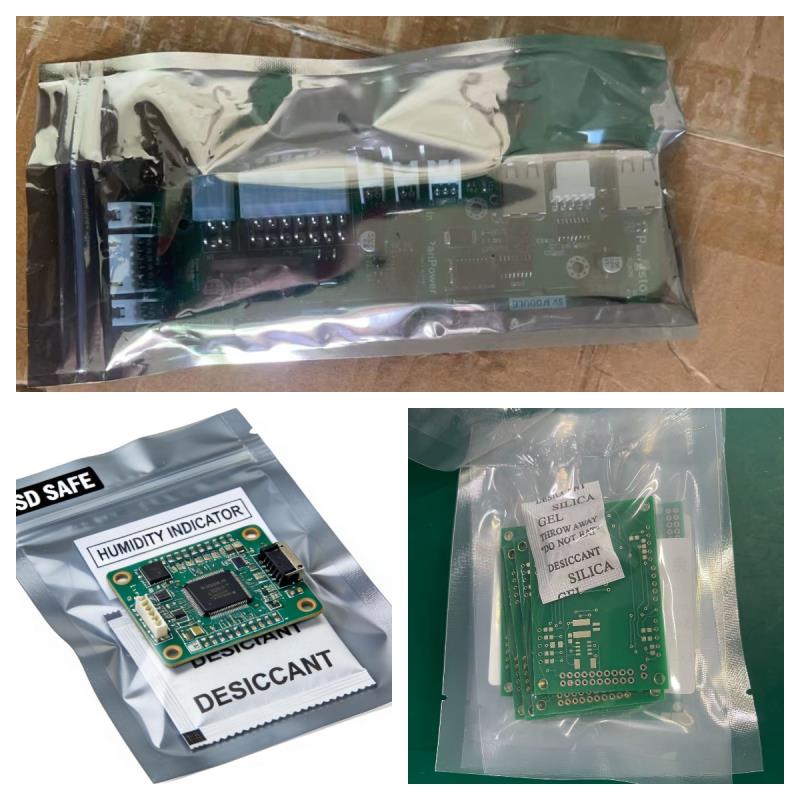
ESD and handling discipline
ESD control programs are commonly aligned to ANSI/ESD S20.20 or IEC 61340-5-1, both of which define requirements for an ESD control program (grounding, packaging, personnel controls). EOS/ESD Association notes IEC 61340-5-1 is technically equivalent to ANSI/ESD S20.20, which helps when exporting to mixed markets.
Moisture sensitivity and shipping readiness
For moisture/reflow-sensitive SMDs, J-STD-033 describes floor-life concepts and handling/packing/shipping requirements intended to avoid moisture/reflow-related failures. For boards and bare PCBs, IPC-1601A covers phases from manufacture through delivery, receiving, stocking, and assembly/soldering, which is directly relevant to exporters who store boards before shipment.
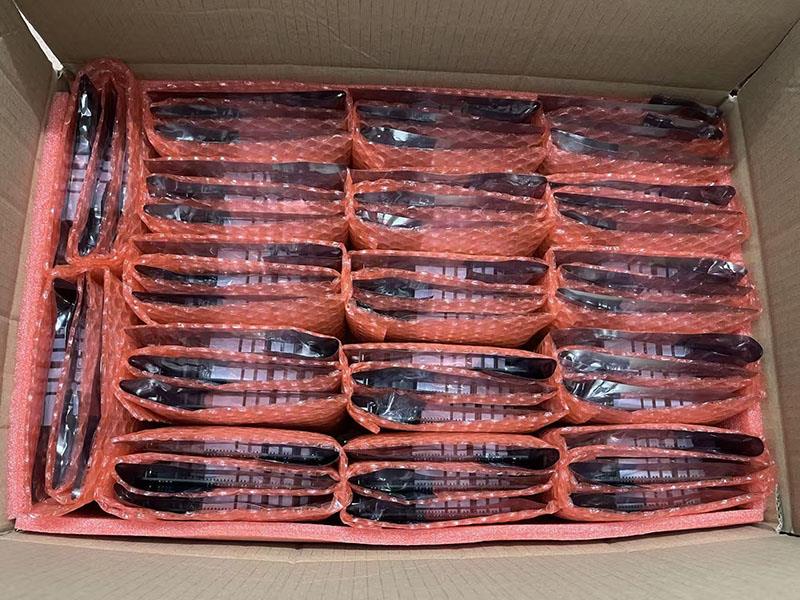
Transit validation
For transit robustness, the International Safe Transit Association publishes ISTA Procedure 3A, a commonly used parcel-shipment simulation test description that helps validate packaging against vibration, drops, and handling hazards.
|
Packaging check |
Minimum exporter practice |
Record |
|
ESD |
Shielding bag + label; EPA handling |
Packing photo |
|
Moisture |
Dry pack with desiccant + HIC + seal date |
Bag label scan |
|
Mechanical |
Foam separation; corner protection; no loose hardware |
Packing spec |
|
Identification |
Carton label includes PN/rev, PO, qty, serial range |
Label map |
________________________________________
Conclusion
A complete exporter QC checklist works best when organized into three categories:
1. Acceptance language: document IPC-based acceptance criteria and product class (IPC-A-610 and J-STD-001) plus bare-board baselines (IPC-6012/IPC-A-600)
2. Evidence and traceability: ship a dossier with CoC, test records, and risk-appropriate traceability aligned to IPC-1782 inside an ISO 9001 QMS
3. Export survival: preserve quality through ESD/moisture/transit controls using ANSI/ESD S20.20 or IEC 61340-5-1, J-STD-033, IPC-1601A, and packaging validation such as ISTA Procedure 3A
By following this checklist, PCBA exporters can ensure their shipments meet international standards, pass customer inspections, and minimize delays or returns, building trust with overseas buyers and enhancing their competitive edge in the global market.
-
02 Mar 2026 17:51:40 GMT
PCBA Functional Testing: Methods and Industry Standards
-
27 Feb 2026 12:48:42 GMT
The Complete PCBA Quality Control Checklist for Exporters