


What Should You Specify to the Manufacturer for PCB Prototyping?
 26 Sep 2019 14:11:12 GMT
By admin
26 Sep 2019 14:11:12 GMT
By admin
PCB Prototyping Guide
In the product development cycle, PCB prototyping is a critical stage that bridges the gap between circuit design and mass production. A well-executed prototype not only validates your design but also helps identify potential issues early, saving time and costs in the long run. However, to ensure that the manufacturer delivers a prototype that matches your exact requirements, you need to provide clear and detailed specifications. This guide outlines the key information you should communicate to your PCB manufacturer when requesting a prototype.
1. Complete Design Files and Documentation
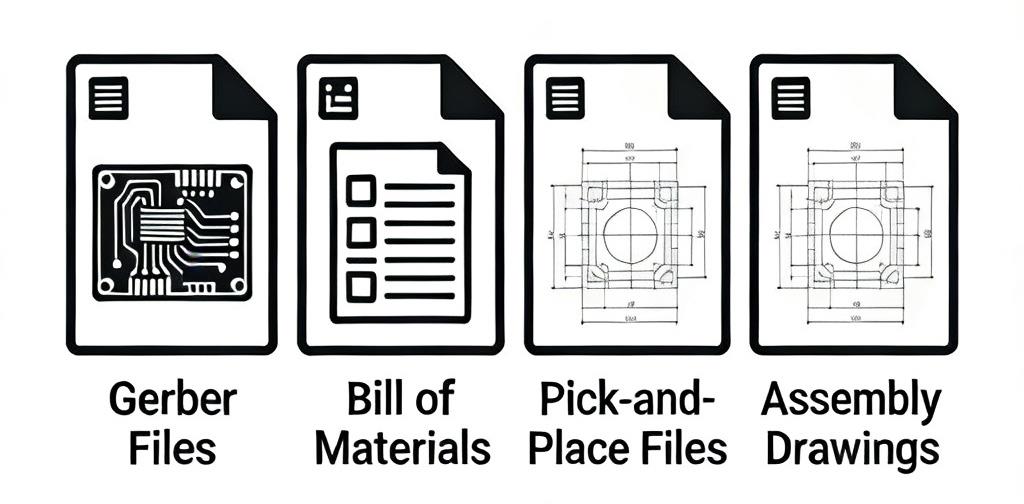
The foundation of a successful PCB prototype is a comprehensive set of design files. Without these, the manufacturer cannot accurately replicate your design. You should provide:
• Gerber Files: These are the standard files used in PCB manufacturing, containing all the information about the circuit layout, copper traces, pads, and vias. Ensure that your Gerber files are in the correct format (RS-274X is the most common) and include all necessary layers, such as top and bottom copper layers, solder mask, silkscreen, and drill files.
• Bill of Materials (BOM): A detailed list of all components that will be mounted on the PCB, including part numbers, quantities, and manufacturers. This helps the manufacturer understand the component requirements and ensures that the prototype is compatible with the intended components.
• Pick-and-Place Files: These are coordinate files that provide precise X, Y, and rotation positions for each component, enabling automated SMT assembly machines to place parts accurately and efficiently.
• Assembly Drawings: These drawings provide visual instructions for component placement, orientation, and any special assembly requirements. They are especially useful for prototypes that require surface-mount technology (SMT) or complex component layouts.
• Design Notes: Any additional notes or specifications that are not included in the Gerber files or BOM, such as special routing requirements, impedance control, or thermal management considerations.
2. PCB Specifications
Next, you need to clearly specify the physical and electrical characteristics of the PCB. These specifications will determine the manufacturing process and materials used for the prototype.
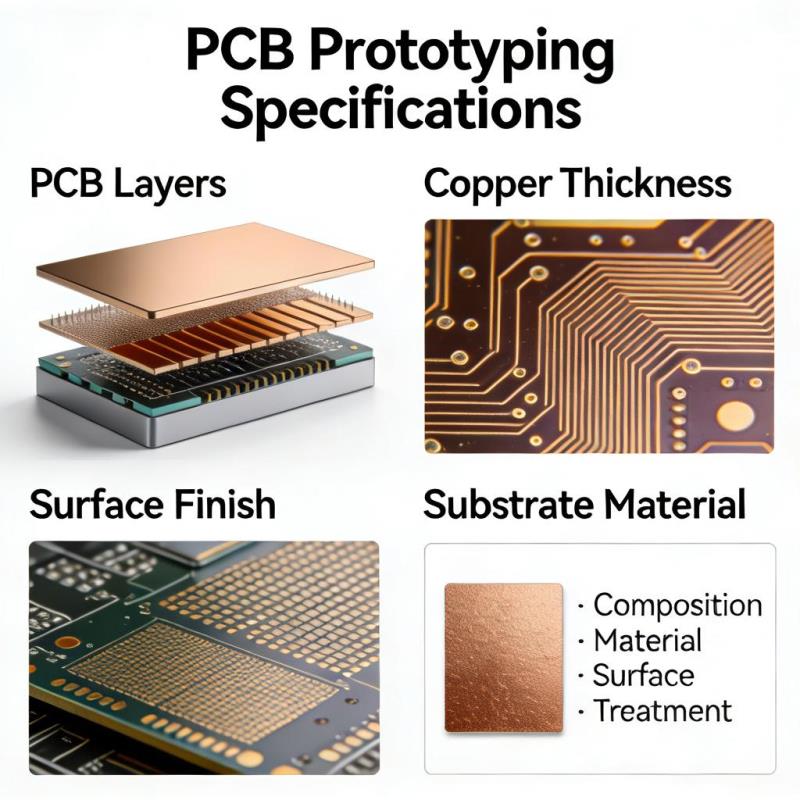
• Number of Layers: Specify whether you need a single-sided, double-sided, or multi-layer PCB. Multi-layer PCBs require more complex manufacturing processes, so it's important to clarify the number of layers and the stackup configuration (the arrangement of copper and insulation layers).
• Substrate Material: The most common substrate material is FR-4, a fiberglass-reinforced epoxy resin that offers excellent mechanical strength and electrical insulation properties. However, if your prototype requires special properties, such as high-temperature resistance or high-frequency performance, you may need to specify a different material, such as aluminum-based substrates or high-frequency substrates like Rogers.
• Copper Thickness: Copper thickness is measured in ounces per square foot (oz/ft²), with 1 oz being the standard thickness for most applications. Thicker copper (2 oz or 3 oz) is required for high-current applications, as it can carry more current without overheating.
• Board Thickness: The standard board thickness is 1.6 mm, but you can specify a different thickness depending on your design requirements. Thinner boards are used for compact devices, while thicker boards offer more mechanical strength.
• Surface Finish: The surface finish protects the copper traces from corrosion and ensures good solderability. Common surface finishes include HASL (Hot Air Solder Leveling), ENIG (Electroless Nickel Immersion Gold), and OSP (Organic Solderability Preservative). ENIG is a popular choice for prototypes because it offers excellent solderability and durability.
3. Special Requirements and Constraints
If your PCB prototype has any special requirements or constraints, it's important to communicate these to the manufacturer early in the process. This includes:
• Impedance Control: If your design requires impedance control (for high-speed digital circuits or RF applications), you need to specify the target impedance value (e.g., 50 ohms or 100 ohms) and the trace width and spacing that will achieve this impedance. The manufacturer may need to adjust the trace dimensions or use special materials to meet these requirements.
• Thermal Management: If your PCB will generate a lot of heat (e.g., for power electronics or high-performance components), you need to specify any thermal management requirements, such as heat sinks, thermal vias, or special heat-dissipating materials.
• Environmental Requirements: If your PCB will be used in harsh environments (e.g., automotive, aerospace, or industrial applications), you need to specify any environmental requirements, such as high-temperature resistance, moisture resistance, or vibration resistance.
• Custom Shapes or Cutouts: If your PCB has a custom shape or cutouts, you need to provide a detailed drawing or Gerber file that specifies the exact dimensions and locations of these features.
4. Testing and Inspection Requirements
To ensure that your PCB prototype meets your quality standards, you need to specify the testing and inspection requirements. This includes:
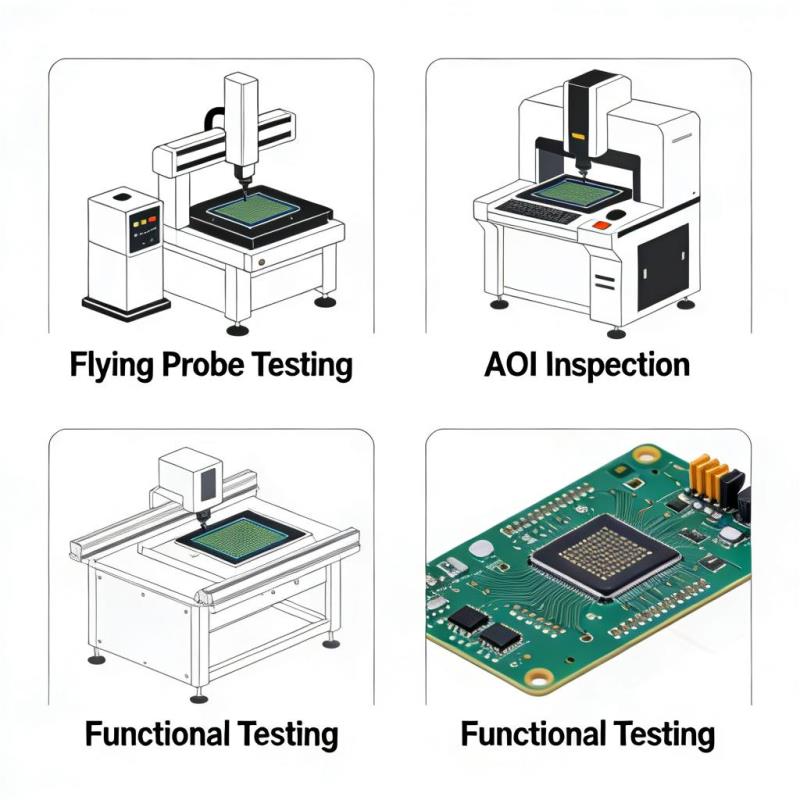
• Electrical Testing: The most common electrical test for PCB prototypes is flying probe testing, which checks for continuity, shorts, and open circuits. You can also specify other tests, such as impedance testing or functional testing, depending on your design requirements.
• Visual Inspection: Visual inspection checks for defects such as solder bridges, missing components, or incorrect component placement. You can specify automated optical inspection (AOI) for a more thorough inspection, especially for complex PCBs.
• Functional Testing: If your prototype requires functional testing (to ensure that it works as intended), you need to provide detailed test procedures and any necessary test equipment or software.
5. Quantity, Lead Time, and Delivery Requirements
Finally, you need to specify the quantity of prototypes you need, the lead time (the time required for manufacturing and delivery), and any delivery requirements.
• Quantity: PCB prototypes are typically ordered in small quantities (1-10 pieces) for initial testing, but you can order larger quantities if you need to test multiple units or conduct field trials.
• Lead Time: Lead times for PCB prototypes can vary depending on the complexity of the design and the manufacturer's workload. Standard lead times are 3-7 days, but you can expedite the order for an additional fee if you need the prototypes sooner.
• Delivery Requirements: Specify the delivery method (e.g., standard shipping, express shipping) and the delivery address. You may also need to specify any customs requirements if you are ordering from an international manufacturer.
Conclusion
Clear and detailed communication with your PCB manufacturer is essential for a successful prototype. By providing complete design files, detailed specifications, special requirements, testing requirements, and delivery requirements, you can ensure that the manufacturer delivers a prototype that matches your exact needs. This will help you validate your design, identify potential issues early, and move forward with mass production with confidence.
-
02 Mar 2026 17:51:40 GMT
PCBA Functional Testing: Methods and Industry Standards
-
27 Feb 2026 12:48:42 GMT
The Complete PCBA Quality Control Checklist for Exporters