


Printed Circuit Board (PCB) : The Backbone of Modern Electronics
 05 Sep 2022 14:30:01 GMT
By admin
05 Sep 2022 14:30:01 GMT
By admin
Introduction to Printeded Circuit Boards
In the fast-paced world of modern electronics, every device from the smallest smartwatch to the most powerful industrial computer relies on a critical component: the Printed Circuit Board (PCB). PCBs are the unsung heroes of the digital age, providing a stable platform for electronic components to connect and function seamlessly. Before the invention of PCBs, electronic devices used bulky and unreliable point-to-point wiring, which made devices large, expensive, and prone to failure. The introduction of PCBs revolutionized the electronics industry, enabling the compact, efficient, and mass-producible devices we use today.
A PCB is a flat board made of insulating material, typically fiberglass-reinforced epoxy resin (FR-4), with thin copper traces etched onto its surface. These copper traces act as conductive pathways, carrying electrical signals and power between electronic components such as resistors, capacitors, diodes, and integrated circuits. PCBs not only provide mechanical support for these components but also ensure that electrical signals are transmitted reliably without interference.
The Basic Structure of a Printed Circuit Board
Understanding the structure of a PCB is essential for anyone working with electronics. A standard PCB consists of several key layers and components, each with a specific function.
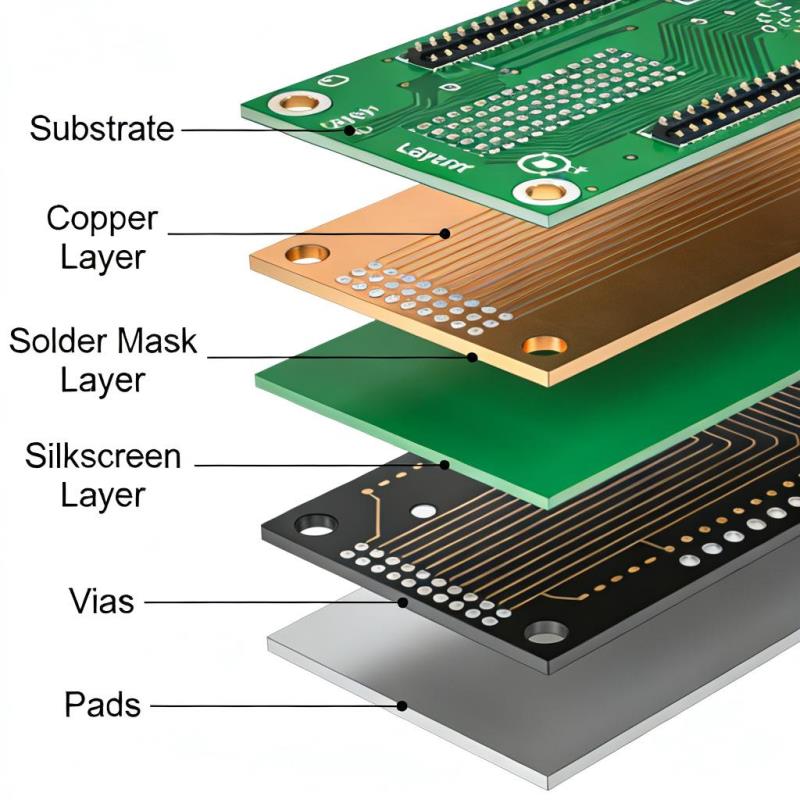
1. Substrate: The substrate is the base material of the PCB, providing mechanical strength and electrical insulation. The most common substrate material is FR-4, a flame-retardant fiberglass-reinforced epoxy resin that offers excellent mechanical and electrical properties. Other substrate materials include aluminum-based substrates for high-power applications and flexible materials like Kapton for bendable PCBs.
2. Copper Layers: Thin copper foil is laminated onto the substrate to create the conductive traces. PCBs can have single-sided (copper on one side), double-sided (copper on both sides), or multi-layer (multiple copper layers separated by insulation) designs. The thickness of the copper foil is typically measured in ounces per square foot, with 1 oz being the standard thickness for most applications.
3. Solder Mask Layer: The solder mask is a protective coating, typically green, that covers the copper traces. It prevents solder bridging (the unwanted connection between two traces) and protects the copper from corrosion and environmental damage. The solder mask also helps to improve the overall appearance of the PCB.
4. Silkscreen Layer: The silkscreen layer is the top layer of the PCB, used to printed labels, component reference designators, and other markings. This layer helps with assembly, repair, and identification of components on the PCB.
5. Vias and Pads: Vias are small holes drilled through the PCB to connect copper layers in multi-layer designs. Pads are exposed copper areas where electronic components are soldered to the PCB. Pads can be through-hole (for components with leads that pass through the board) or surface-mount (for components that are soldered directly to the surface of the board).
The Manufacturing Process of Printed Circuit Boards
The manufacturing process of a PCB is a complex and precise process that involves several steps to ensure the final product meets the required specifications.
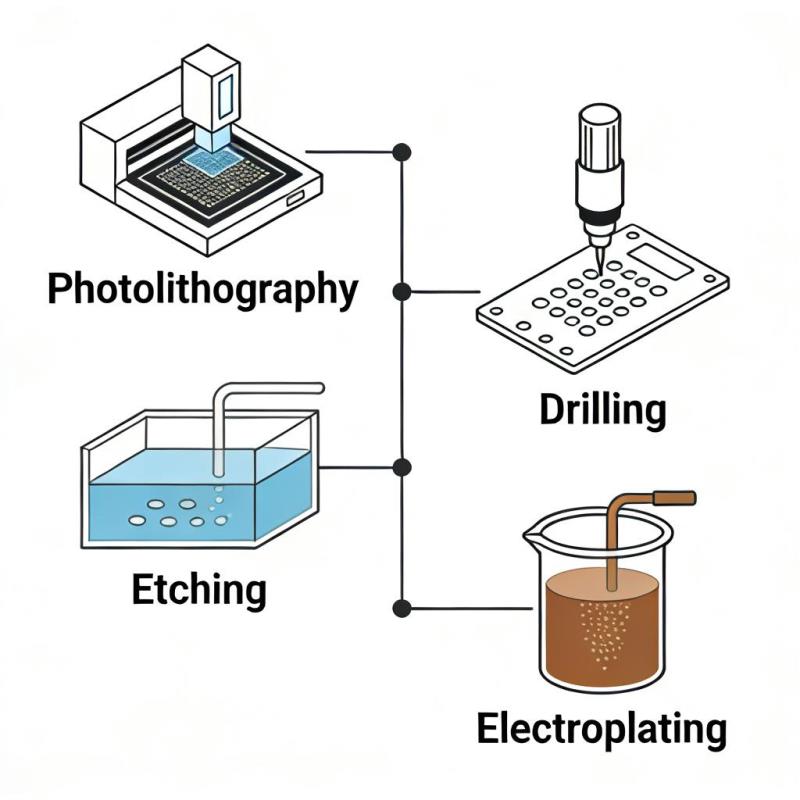
1. Photolithography: The first step in manufacturing a PCB is to create a photolithographic plate of the circuit design. This plate is used to transfer the circuit pattern onto the copper-clad substrate using ultraviolet light.
2. Drilling: After the circuit pattern is transferred, holes are drilled through the PCB to create vias and component holes. The drilling process uses high-speed drills with very small diameters to ensure precision.
3. Etching: The etching process removes the unwanted copper from the substrate, leaving only the desired circuit traces. A chemical solution, typically ferric chloride, is used to etch away the copper that is not protected by the photoresist.
4. Electroplating: The drilled holes and pads are electroplated with copper to ensure electrical conductivity between the layers. This process also helps to strengthen the holes and improve solderability.
5. Solder Mask and Silkscreen Application: The solder mask is applied to the PCB, and the silkscreen layer is printeded on top. The PCB is then cured to harden the solder mask and silkscreen.
6. Testing and Inspection: The final step in the manufacturing process is testing and inspection. The PCB is tested for continuity, shorts, and other defects using automated testing equipment. Visual inspection is also performed to ensure that the PCB meets the required quality standards.
Different Types of Printed Circuit Boards
PCBs are available in several different types, each designed for specific applications and requirements.
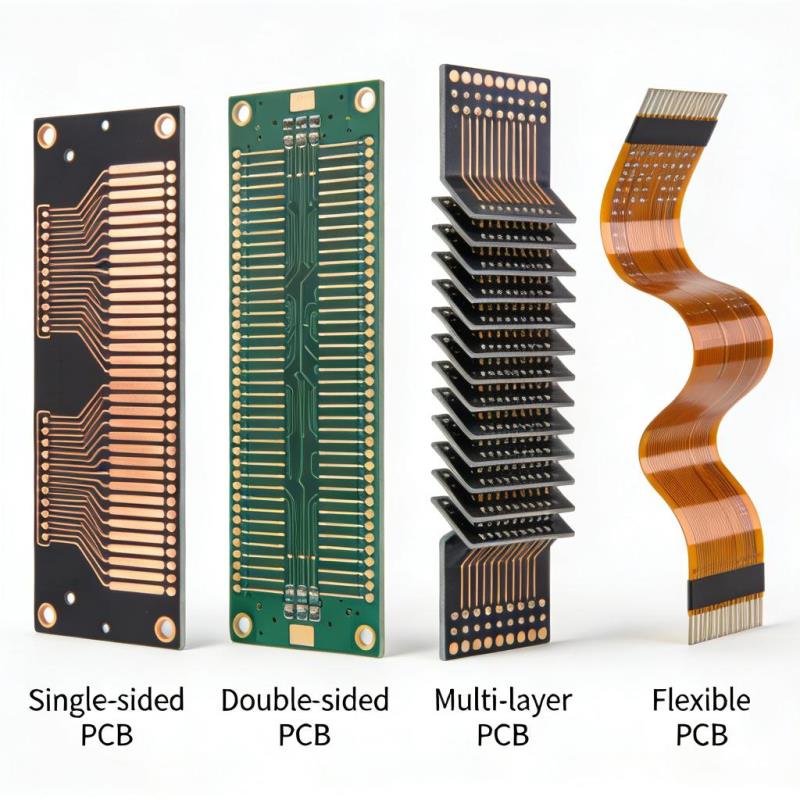
1. Single-sided PCBs: Single-sided PCBs have copper traces on only one side of the substrate. They are the simplest and most cost-effective type of PCB, used in simple electronic devices such as toys, calculators, and power supplies.
2. Double-sided PCBs: Double-sided PCBs have copper traces on both sides of the substrate, with vias connecting the two sides. They are more complex than single-sided PCBs and are used in a wide range of applications, including computers, smartphones, and industrial equipment.
3. Multi-layer PCBs: Multi-layer PCBs consist of multiple copper layers separated by insulation layers. They are used in complex electronic devices that require high component density and complex signal routing, such as high-performance computers, aerospace equipment, and medical devices.
4. Flexible PCBs: Flexible PCBs are made of bendable substrates like Kapton, allowing them to be bent or folded to fit into tight spaces. They are used in devices such as smartphones, wearables, and medical devices where space is limited.
5. Rigid-Flex PCBs: Rigid-flex PCBs combine rigid and flexible sections, providing the best of both worlds. They are used in devices such as foldable smartphones, aerospace equipment, and medical devices where both rigidity and flexibility are required.
Applications of Printed Circuit Boards
PCBs are used in almost every electronic device, from consumer electronics to industrial equipment and aerospace applications.
1. Consumer Electronics: PCBs are used in smartphones, tablets, laptops, televisions, and other consumer electronics. They enable the compact size and high performance of these devices.
2. Industrial Equipment: PCBs are used in industrial control systems, robotics, and other industrial equipment. They provide the reliability and durability required for harsh industrial environments.
3. Medical Devices: PCBs are used in medical devices such as MRI machines, pacemakers, and diagnostic equipment. They must meet strict quality and reliability standards to ensure patient safety.
4. Aerospace and Defense: PCBs are used in aircraft, satellites, and military equipment. They must be able to withstand extreme temperatures, vibration, and other harsh environmental conditions.
5. Automotive: PCBs are used in modern cars for engine control, infotainment systems, and safety features. They must be able to withstand high temperatures and vibration.
The Future of Printed Circuit Boards
As technology continues to evolve, PCBs will continue to advance to meet the demands of new electronic devices. Some of the key trends in PCB technology include:
1. High-Density Interconnect (HDI) PCBs: HDI PCBs use smaller vias and thinner traces to pack more components into a smaller space, enabling the development of even smaller and more powerful devices.
2. Green PCB Manufacturing: There is a growing focus on environmentally friendly PCB manufacturing processes, using lead-free solder and recyclable materials.
3. Flexible and Stretchable PCBs: Advances in flexible materials are enabling the development of stretchable PCBs that can be used in wearable devices and other applications where flexibility is essential.
4. 3D PCBs: 3D PCBs are being developed to provide even more component density and complex signal routing, enabling the development of next-generation electronic devices.
Conclusion
Printed Circuit Boards(PCB) are the backbone of modern electronics, enabling the compact, efficient, and reliable devices we use every day. From simple single-sided PCBs to complex multi-layer and flexible PCBs, they play a critical role in almost every electronic device. As technology continues to evolve, PCBs will continue to advance to meet the demands of new electronic devices, ensuring that the electronics industry continues to innovate and grow. Understanding the basics of PCBs is essential for anyone working with electronics, whether you are a hobbyist, a student, or a professional engineer.
-
02 Mar 2026 17:51:40 GMT
PCBA Functional Testing: Methods and Industry Standards
-
27 Feb 2026 12:48:42 GMT
The Complete PCBA Quality Control Checklist for Exporters