


A Detailed Explanation of the Working Principles of Multilayer PCBs
 15 Sep 2021 14:48:32 GMT
By admin
15 Sep 2021 14:48:32 GMT
By admin
Introduction
In the fast-evolving field of electronic engineering, the demand for smaller, more powerful, and more complex electronic devices has driven the development of advanced printed circuit board (PCB) technologies. Multilayer PCBs have emerged as a core solution to meet these demands, enabling the integration of dense components and complex circuits in a compact form factor. Unlike single-sided or double-sided PCBs, multilayer PCBs use multiple layers of conductive traces and insulating materials to achieve higher performance and functionality. Understanding the working principles of multilayer PCBs is essential for electronic engineers, product designers, and manufacturers to optimize PCB design and ensure reliable electronic device performance.
Basic Structure of Multilayer PCBs
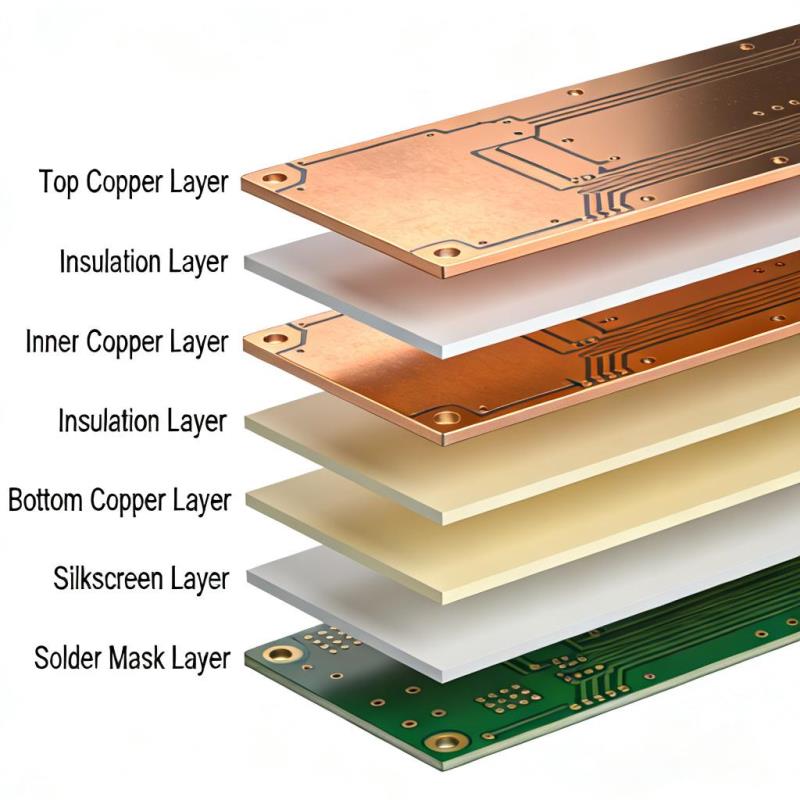
Before delving into the working principles, it is important to understand the basic structure of a multilayer PCB. A typical multilayer PCB consists of several key layers:
1. Copper Layers: These are the conductive layers that carry electrical signals and power. A multilayer PCB can have 4 to 30 or more copper layers, with each layer etched with precise traces to connect components and route signals. The top and bottom copper layers are often used for component mounting, while the inner copper layers are used for signal routing, power distribution, and grounding.
2. Insulation Layers: Also known as prepreg, these layers are made of fiberglass-reinforced epoxy resin and are placed between copper layers to prevent electrical interference and short circuits. The insulation layers provide mechanical strength and electrical insulation between the conductive layers.
3. Solder Mask Layer: This protective layer covers the copper traces to prevent solder bridging and corrosion, and to protect the circuit from environmental damage. The solder mask is typically green, but can also be other colors like red, blue, or black.
4. Silkscreen Layer: This top layer is used to print labels, component reference designators, and other markings to aid in assembly and repair.
Working Principles of Multilayer PCBs
1. Signal Transmission
The core function of a multilayer PCB is to transmit electrical signals between components. In a multilayer PCB, signals are transmitted through the copper traces on different layers, and vias are used to connect signals between layers. Vias are small, plated holes that pass through the insulation layers to connect copper layers, allowing signals to travel between the top, bottom, and inner layers.
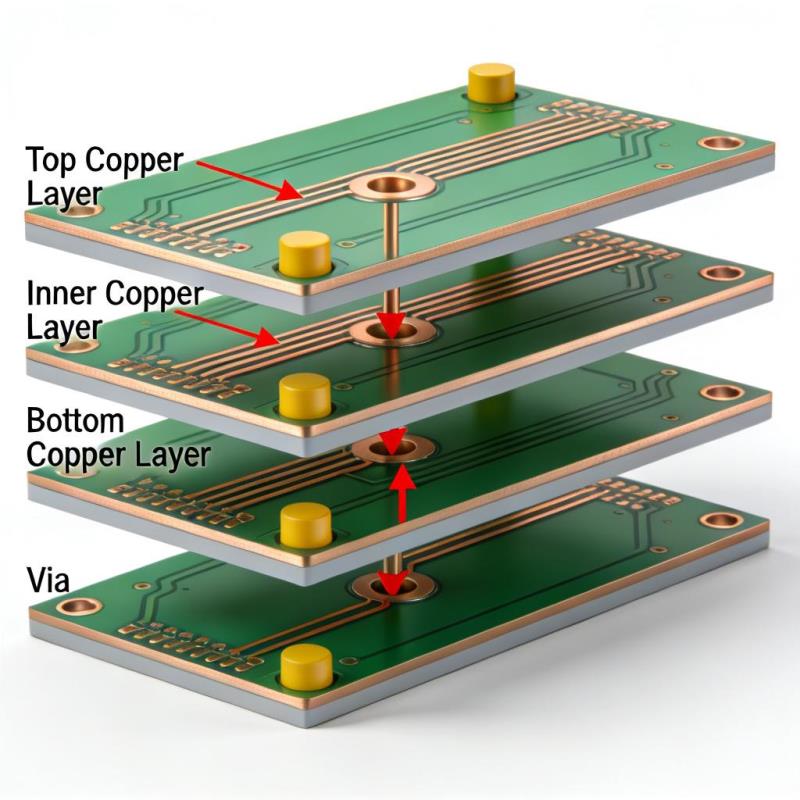
When a signal is transmitted through a copper trace, it travels as an electrical current. The insulation layers between copper layers prevent signals from interfering with each other, ensuring signal integrity. This is especially important for high-speed digital circuits and RF applications, where even small amounts of interference can cause signal distortion or loss.
In high-speed circuits, the design of the signal traces is critical to ensure signal integrity. The width and thickness of the copper traces, as well as the distance between traces, are carefully designed to control impedance and minimize signal reflection and crosstalk. The inner copper layers are often used for high-speed signal routing, as they are shielded from external interference by the outer layers.
2. Power Distribution and Grounding
Multilayer PCBs also play a crucial role in power distribution and grounding. Dedicated power and ground layers are often used in multilayer PCBs to provide a stable power supply and reduce noise and interference in the circuit.
Power layers are used to distribute power to components throughout the PCB, ensuring that each component receives the correct voltage and current. Ground layers provide a common reference point for electrical signals and help to reduce electromagnetic interference (EMI) by acting as a shield for signal traces.
The use of dedicated power and ground layers also helps to reduce the size of the PCB, as they eliminate the need for large power traces on the signal layers. This allows for more efficient use of space and higher component density.
3. Signal Isolation and Shielding
One of the key advantages of multilayer PCBs is their ability to provide signal isolation and shielding. By placing signal traces on different layers and using ground layers as shields, multilayer PCBs can reduce crosstalk between signals and minimize EMI.
For example, high-speed signal traces can be placed between two ground layers to create a shielded environment, which reduces the amount of electromagnetic radiation emitted by the signals and prevents interference from other signals. This is especially important for applications like wireless communication devices, where EMI can affect the performance of the device.
Key Technologies in Multilayer PCBs
1. Via Technology
Vias are a critical technology in multilayer PCBs, as they allow signals to travel between different layers. There are three main types of vias:
1. Through-Hole Vias: These vias pass through the entire PCB, connecting the top and bottom layers and all inner layers. Through-hole vias are the most common type of via and are used for general signal routing.
2. Blind Vias: These vias connect the top or bottom layer to one or more inner layers, but do not pass through the entire PCB. Blind vias are used to save space and reduce the number of vias on the surface of the PCB.
3. Buried Vias: These vias connect two or more inner layers, but do not reach the top or bottom layer. Buried vias are used for high-density PCBs, where space is limited and surface vias would interfere with component mounting.
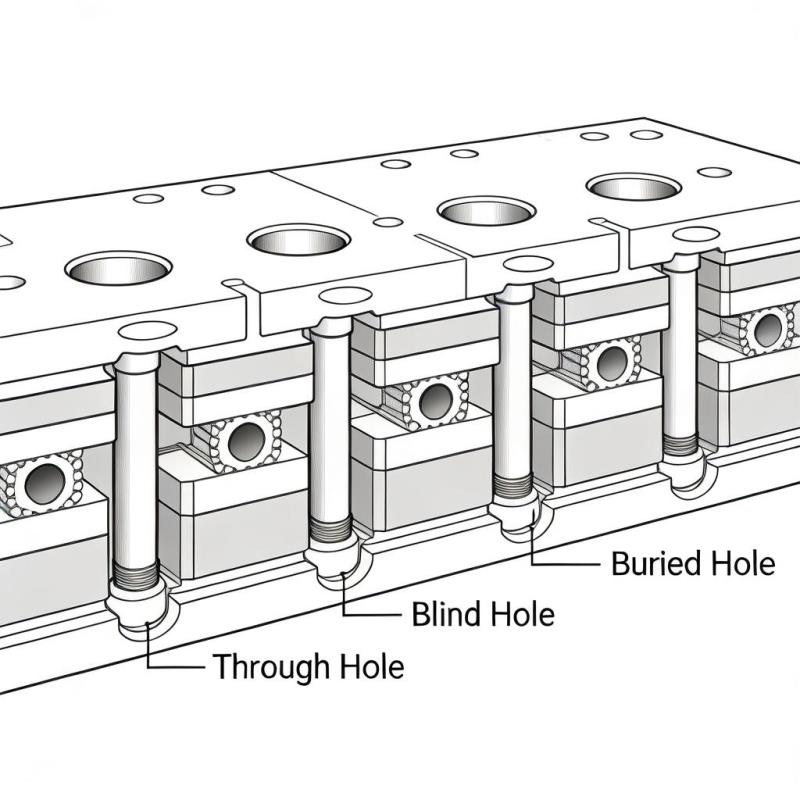
The design of vias is critical to the performance of a multilayer PCB. The size and placement of vias must be carefully designed to ensure that they do not interfere with signal transmission or cause signal reflection. The plating of vias is also important, as it ensures that the vias are electrically conductive and can carry signals between layers.
2. Lamination Technology
Lamination is the process of bonding the copper layers and insulation layers together to form a single, unified PCB. The lamination process involves stacking the copper layers and insulation layers together and applying high heat and pressure to bond them.
The lamination process must be carefully controlled to ensure that the layers are properly aligned and bonded. Any misalignment or bonding defects can cause signal interference or short circuits in the PCB. The temperature and pressure used in the lamination process depend on the type of insulation material used and the number of layers in the PCB.
Advantages and Applications of Multilayer PCBs
Multilayer PCBs offer several key advantages over single-sided or double-sided PCBs:
1. Higher Component Density: Multilayer PCBs allow for more components and complex circuits to be packed into a smaller space, making them ideal for portable devices like smartphones and wearables.
2. Better Signal Integrity: The use of multiple layers and dedicated power and ground layers reduces signal interference and improves signal integrity, making them suitable for high-speed digital circuits and RF applications.
3. Improved Power Distribution: Dedicated power and ground layers provide a stable power supply and reduce noise and interference in the circuit, improving the performance and reliability of the electronic device.
4. Greater Design Flexibility: Multilayer PCBs allow for more complex circuit designs, including the use of blind and buried vias, which can help to reduce the size of the PCB and improve its performance.
Multilayer PCBs are used in a wide range of electronic devices, including smartphones, tablets, laptops, industrial control systems, aerospace equipment, and medical devices. They are also used in high-power applications like power supplies and motor controllers, where their ability to handle high currents and provide stable power distribution is essential.
Conclusion
Multilayer PCBs are a critical technology in modern electronic design, enabling the development of small, powerful, and complex electronic devices. The working principles of multilayer PCBs are based on the transmission of signals through copper traces, the use of vias to connect layers, and the distribution of power and ground through dedicated layers. By understanding these working principles and key technologies, electronic engineers and product designers can optimize PCB design and ensure reliable electronic device performance.
As the demand for smaller, more powerful electronic devices continues to grow, the importance of multilayer PCBs will only increase. Ongoing advancements in materials and manufacturing processes will continue to improve the performance and functionality of multilayer PCBs, enabling even more innovative electronic designs in the future.
-
02 Mar 2026 17:51:40 GMT
PCBA Functional Testing: Methods and Industry Standards
-
27 Feb 2026 12:48:42 GMT
The Complete PCBA Quality Control Checklist for Exporters