


How to Reduce PCB Heat: Effective Methods for Thermal Management
 20 Jul 2022 15:01:39 GMT
By Ken
20 Jul 2022 15:01:39 GMT
By Ken
Introduction
In the rapidly evolving world of electronic design, printed circuit boards (PCBs) are the backbone of nearly every electronic device, from smartphones and laptops to industrial control systems and aerospace equipment. As electronic components become smaller, more powerful, and more densely packed on PCBs, heat generation has become a critical challenge that engineers and designers must address. Excessive heat on a PCB can lead to a range of issues, including reduced component lifespan, degraded performance, increased risk of component failure, and even safety hazards such as fire or electrical shorts. Understanding the causes of PCB heat and implementing effective thermal management strategies is essential to ensure the reliability, performance, and longevity of electronic devices.
Why Do PCBs Generate Heat?
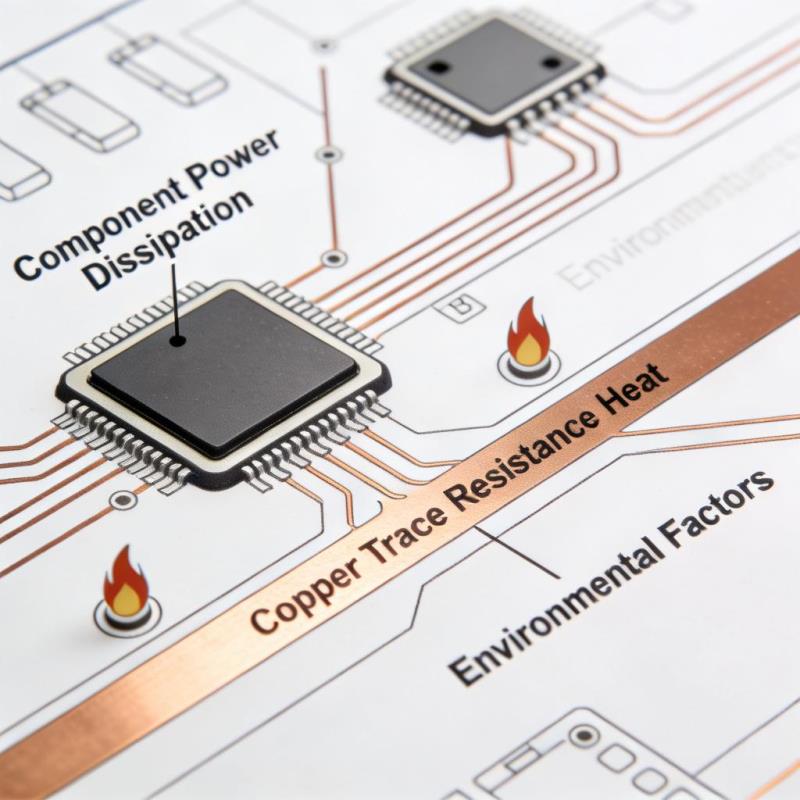
Before exploring solutions to reduce PCB heat, it is important to understand the primary causes of heat generation in PCBs. The majority of heat in a PCB is generated by electrical power loss in the components and the conductive traces themselves.
1. Component Power Dissipation: Electronic components such as microprocessors, power transistors, voltage regulators, and integrated circuits (ICs) consume electrical power, and a portion of this power is converted into heat. High-power components, such as those used in industrial motor controllers or high-performance computing devices, generate significant amounts of heat during operation.
2. Copper Trace Power Loss: The conductive copper traces on a PCB have inherent resistance, and when electrical current flows through them, power is lost as heat according to Joule's Law (P = I²R), where P is power loss, I is current, and R is the resistance of the trace. Thinner traces and higher currents result in greater power loss and heat generation.
3. Environmental Factors: The operating environment of the PCB can also contribute to heat buildup. If the device is used in a high-temperature environment, or if there is poor ventilation around the PCB, heat will not dissipate effectively, leading to higher temperatures on the board.
Effective Methods to Reduce PCB Heat
1. PCB Design Optimization
The foundation of effective thermal management begins with PCB design. By optimizing the layout and structure of the PCB, engineers can minimize heat generation and improve heat dissipation.
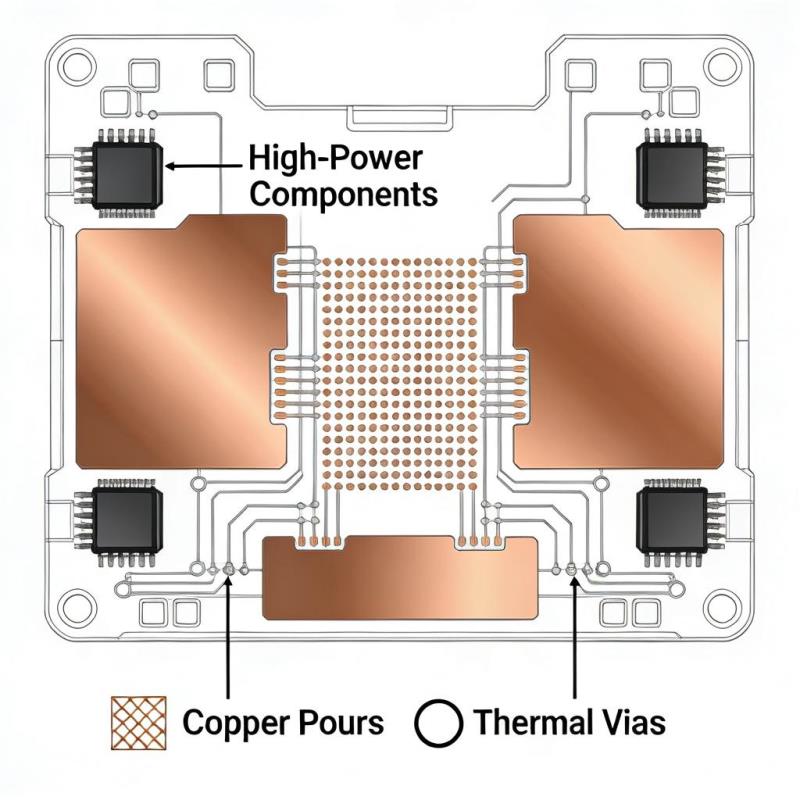
• Component Placement: High-power components should be placed strategically to avoid creating hotspots on the PCB. They should be separated from heat-sensitive components and placed in areas with good ventilation. For example, voltage regulators and power transistors should be placed near the edge of the PCB to allow heat to dissipate more easily.
• Copper Trace Design: Increasing the width and thickness of copper traces can reduce their resistance, thereby reducing power loss and heat generation. Additionally, using large areas of copper (known as copper pours or ground planes) can help to spread heat across the PCB, preventing hotspots from forming. Ground planes also act as a heat sink, absorbing heat from components and dissipating it to the surrounding environment.
• Thermal Vias: Thermal vias are small, plated holes that connect different layers of the PCB, allowing heat to transfer from the top layer (where components are mounted) to the bottom layer or inner layers. Thermal vias are particularly useful for dissipating heat from high-power components to the ground plane or other heat-dissipating areas of the PCB.
2. High-Thermal-Conductivity Materials
Choosing the right materials for the PCB can significantly improve its thermal performance.
• Substrate Materials: Traditional PCB substrates such as FR-4 have relatively low thermal conductivity, making them less effective at dissipating heat. For high-power applications, substrates with higher thermal conductivity, such as aluminum-based substrates (MCPCBs) or copper-based substrates, can be used. These substrates have much higher thermal conductivity than FR-4, allowing heat to dissipate more quickly from the components to the surrounding environment.
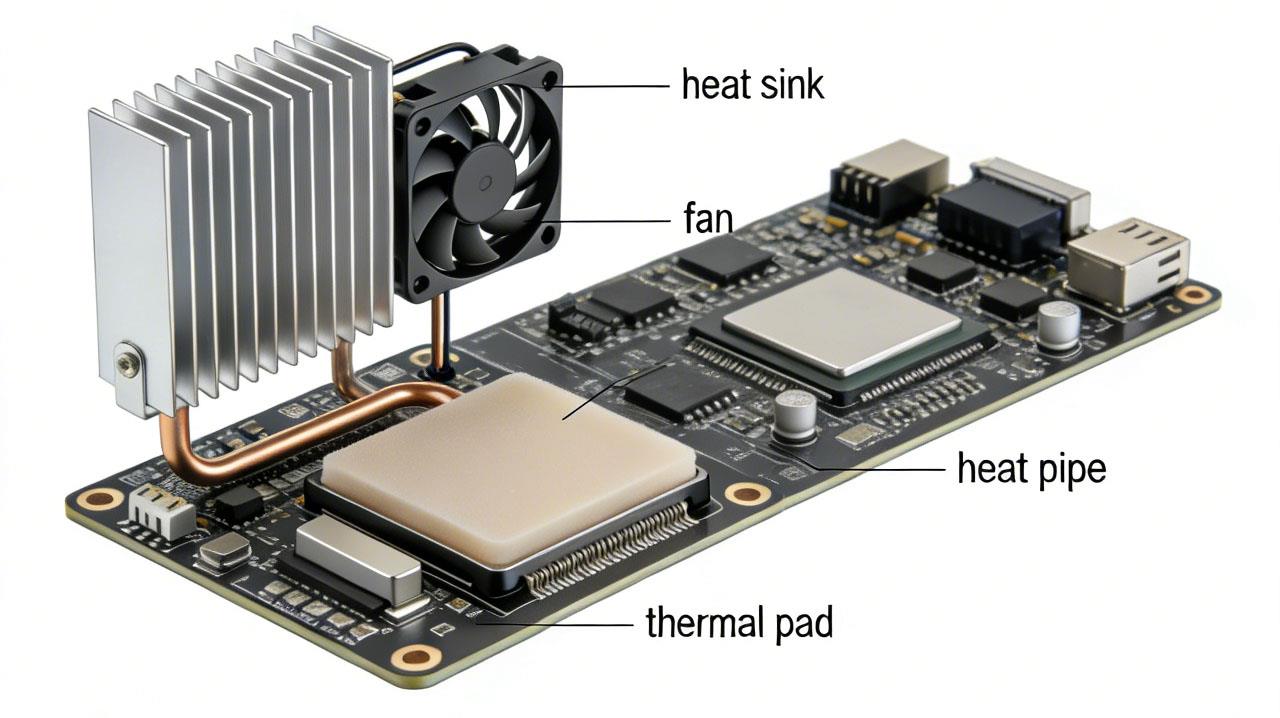
• Thermal Interface Materials (TIMs): Thermal interface materials are used to improve the thermal connection between components and heat sinks or other heat-dissipating components. TIMs such as thermal paste, thermal pads, and thermal adhesives fill in the air gaps between components and heat sinks, improving heat transfer and reducing thermal resistance.
3. Active and Passive Cooling Components
In many cases, PCB design optimization and material selection alone are not sufficient to manage heat, and additional cooling components are required.
• Passive Cooling: Passive cooling components do not require power to operate and rely on natural convection and radiation to dissipate heat. The most common passive cooling component is the heat sink, which is a metal component with fins that increase the surface area available for heat dissipation. Heat sinks are attached to high-power components to absorb heat and dissipate it to the surrounding air. Other passive cooling components include heat pipes, which use a working fluid to transfer heat from one area of the PCB to another, and thermal straps, which are used to transfer heat from components to heat sinks or other heat-dissipating areas.
• Active Cooling: Active cooling components require power to operate and use forced air or liquid to dissipate heat. The most common active cooling component is the fan, which blows air over the PCB and heat sinks, increasing the rate of heat dissipation. Fans are commonly used in high-power applications such as computers, servers, and industrial control systems. For even higher heat loads, liquid cooling systems can be used, which circulate a liquid coolant through the PCB or heat sinks to dissipate heat more effectively.
4. Environmental and Installation Considerations
The environment in which the PCB operates and the way it is installed can also have a significant impact on its thermal performance.
• Ventilation: Ensuring that the device has adequate ventilation is essential for effective heat dissipation. The device should be designed with vents or openings to allow air to flow over the PCB, carrying heat away from the board. In enclosed devices, fans or other active cooling components may be required to ensure adequate airflow.
• Temperature Control: In some cases, it may be necessary to control the temperature of the environment in which the PCB operates. This can be achieved using temperature control systems such as air conditioning or heating, or by using thermal insulation to keep the PCB at a stable temperature.
• Mounting Methods: The way the PCB is mounted can also affect its thermal performance. Mounting the PCB on a metal chassis or heat sink can help to dissipate heat from the PCB to the chassis, which acts as a large heat sink. Additionally, using standoffs or other mounting methods that allow air to flow under the PCB can improve heat dissipation.
Case Study: Thermal Management in Industrial PCBs
In industrial control systems, PCBs are often subjected to high temperatures, high humidity, and other harsh environmental conditions. Effective thermal management is essential to ensure the reliability and performance of these systems.
For example, a manufacturer of industrial motor controllers implemented a comprehensive thermal management strategy for their PCBs. They used aluminum-based substrates to improve heat dissipation, optimized the component placement to avoid hotspots, and used heat sinks and thermal vias to dissipate heat from high-power components. Additionally, they installed fans in the device to provide forced air cooling, ensuring that the PCB remained within a safe temperature range even under heavy load. As a result, the manufacturer was able to reduce the failure rate of their motor controllers by 30% and extend the lifespan of the devices by 50%.
Conclusion
Reducing PCB heat is a critical challenge in electronic design, but with the right strategies and techniques, it can be effectively managed. By optimizing PCB design, choosing high-thermal-conductivity materials, using active and passive cooling components, and considering environmental and installation factors, engineers can ensure that their electronic devices operate reliably and efficiently, even in high-power or high-temperature applications. As electronic components continue to become smaller and more powerful, the importance of effective thermal management will only increase, making it an essential skill for electronic engineers and designers.
-
02 Mar 2026 17:51:40 GMT
PCBA Functional Testing: Methods and Industry Standards
-
27 Feb 2026 12:48:42 GMT
The Complete PCBA Quality Control Checklist for Exporters